
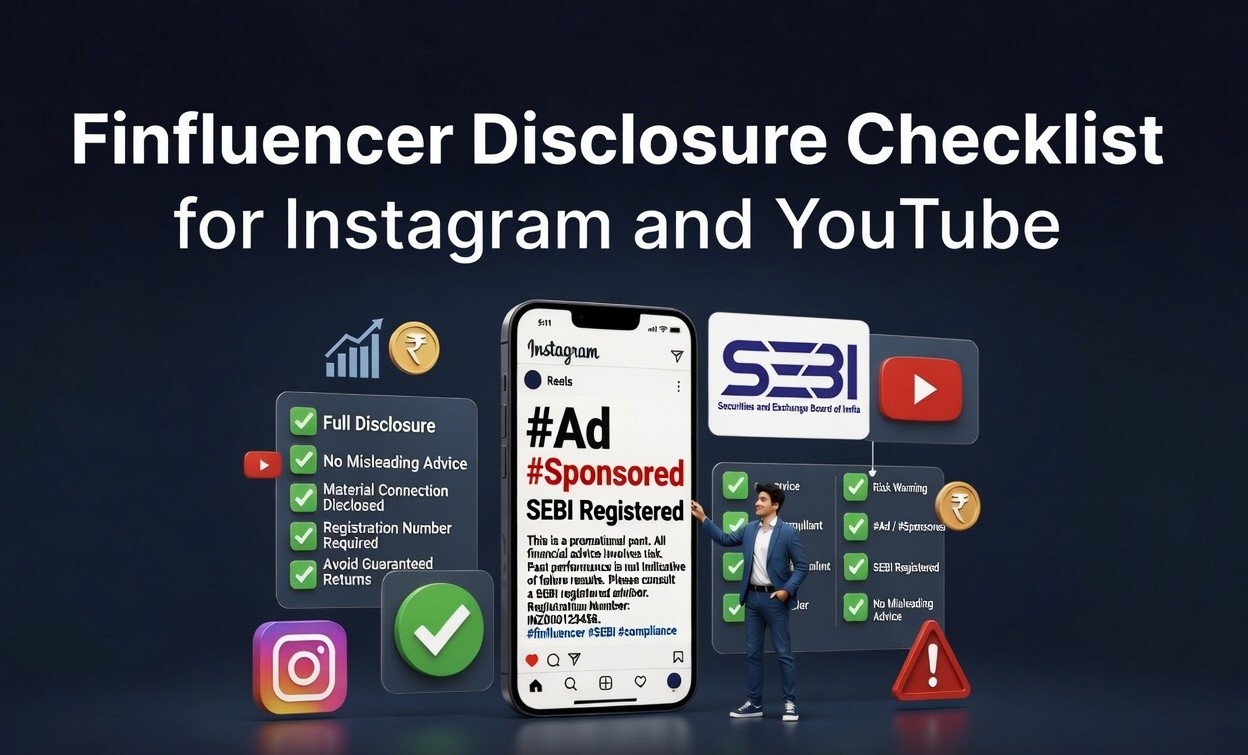
If you create financial content on Instagram or YouTube, you need a clear disclosure system, not just a disclaimer line at the end of a caption. This finfluencer disclosure checklist explains what to disclose, where to place it, and how to stay aligned with SEBI expectations in 2026.
SEBI has made one thing clear: the label on your content matters less than the substance of what your content does. If your post, reel, short, or video starts to look like investment advice, stock recommendations, or performance promotion, your compliance burden rises quickly.
Why disclosure matters
Financial content reaches a large audience and can influence real investment decisions. That is why disclosures are now a core part of content strategy for finfluencers, not a legal afterthought.
In 2026, the biggest risk is not only explicit stock tips. It is also the grey area between education and advice. A creator may think they are just explaining the market, while the audience may receive it as a recommendation. Good disclosure helps reduce that gap.
For creators who are SEBI-registered, disclosure is even more important because your registration details, conflicts, and content boundaries must be visible and consistent. For unregistered creators, the emphasis is on avoiding advice-like language and making the educational nature of the content unmistakable.
What must be disclosed
A strong SEBI finfluencer compliance framework usually includes four disclosure categories.
- Registration status
If you are not registered, do not imply that you are. Avoid language that suggests SEBI backing, approval, or authority that you do not actually have.
- Conflict of interest
- Risk warning
- Content nature
YouTube checklist
YouTube gives you a little more space than Instagram, but the compliance standard is not lower. In fact, longer videos can create more risk because they often include more detail, more claims, and more room for interpretation.
Channel level
Your channel bio should clearly state your status. If you are SEBI-registered, mention your name and registration number in a visible way. If you are not registered, make it clear that your content is for educational purposes only.
Also review your channel name and banner. Avoid words that imply authority, certification, or regulated expertise unless you actually hold that status. A misleading name can create confusion even before a viewer clicks a video.
Video title and thumbnail
Your title and thumbnail should not promise returns or use exaggerated profit language. Claims like “I made ₹1 lakh in a week” or “guaranteed stock winner” are high-risk because they suggest certainty in an uncertain market.
If you use a profit screenshot, make sure the surrounding context is clear and not promotional. The visual should not mislead viewers into thinking success is normal, guaranteed, or repeatable for everyone.
Opening of the video
The first 30 to 60 seconds matter. If the video includes specific securities, market commentary, or strategy discussion, begin with a short disclaimer explaining whether the content is educational or advisory.
If you are registered, state your registration status early. If you hold positions in the securities being discussed, say so plainly. Early disclosure is easier for viewers to notice and helps set the right context.
Description box
The description should carry your standard disclaimer. Keep it consistent across videos so your audience recognizes it and your team can apply it easily.
If the video is sponsored or contains affiliate links, say that clearly. The commercial relationship should not be hidden behind vague language or buried below the fold.
Shorts and live content
Shorts and live streams are not exempt from disclosure rules. In fact, because the format moves fast, you should use short on-screen disclaimers and a clear spoken opening.
For live sessions, begin with a simple statement that the content is educational and not personal advice. If you are giving market commentary in real time, be especially careful not to cross into direct buy or sell suggestions.
Instagram checklist
Instagram content is often consumed quickly, which makes visibility even more important. A disclosure that sits at the bottom of a long caption is easy to miss, so placement matters.
Profile level
Your bio should identify who you are and whether you are registered. If you are SEBI-registered, include your name and registration number in a concise form. If you are not registered, say that your content is educational only.
Also review your bio links. If you are sending users to paid courses, referral links, Telegram groups, or commercial services, that should be apparent from context. Hidden monetization is a compliance risk.
Feed posts
The first line of your caption should signal the nature of the content. For example, “Educational content only - not investment advice” is clearer than a generic hashtag disclaimer.
If you discuss a specific stock, mutual fund, index, or strategy, mention the disclaimer near the top of the caption. On Instagram, users often stop reading before the end, so burying the disclaimer at the bottom reduces its value.
Carousels
For carousel posts, add a disclosure slide when the topic is investment-related. This works well because the viewer sees the disclaimer before or alongside the analysis.
If the carousel includes performance charts, profit screenshots, or backtest results, the disclosure should be visible on the same post. Do not rely on captions alone.
Reels
Reels are high-risk because they are short, fast, and highly shareable. Use a text overlay early in the reel to say the content is for educational purposes only.
If you mention a stock, strategy, or return figure in the reel, make sure your caption repeats the disclaimer. The combination of visual, spoken, and written disclosure is stronger than any one format alone.
Stories
Stories disappear quickly, but that does not make them exempt. If you share stock views, polls, links, or promotional content in Stories, use clear disclosure text inside the Story itself.
This is especially important for link stickers, paid promotions, and “close friends” content. Private-feeling formats are still compliance-sensitive if the subject is financial advice or investment promotion.
Education vs advice
This is the most important section for any finfluencer disclosure checklist. The distinction between education and advice is where many creators get into trouble.
You are usually on safer ground when you explain concepts, describe market structures, discuss historical trends, or compare products at a general level. That kind of content teaches without directing action.
You move closer to advice when you name a specific security and suggest that people buy, sell, hold, or act on it. The risk becomes even higher when you provide entry levels, target prices, stop-losses, or
performance claims.
A good test is simple: if a viewer could reasonably interpret your content as a prompt to take a financial position, you need to review it carefully. If you are not registered and the content looks like advice, the
compliance risk rises sharply.
Common mistakes
Many finfluencers make the same avoidable errors. Some of them are small on the surface but serious in effect.
• Hiding disclaimers at the end of a long caption.
• Using stock profit screenshots without context.
• Speaking like a registered adviser while not being registered.
• Blurring education with direct buy or sell calls.
• Failing to disclose sponsored content.
• Ignoring conflicts of interest.
• Reusing old disclaimers that do not match the current content style.
• Making a reel or short with a high-risk claim and no visible disclosure.
These mistakes are common because creators focus on engagement first and compliance later. For financial content, that sequence should be reversed.
Simple disclosure templates
You do not need complicated language. In many cases, a clear and short disclosure works better than a long legal paragraph.
For educational creators:
Educational content only. Not investment advice. Markets involve risk. Please do your own research and consult a SEBI-registered professional before investing.
For SEBI-registered creators:
Published by ........, SEBI Registered ............, Reg. No. ................. This content is for informational purposes only and should be read with applicable disclosures.
For sponsored content:
This post/video contains paid promotion or affiliate links. I may receive compensation if you use the linked product or service.
The key is consistency. Use the same style across your content so both your audience and your team know what to expect.
How to keep content compliant
Good compliance is not only about one disclaimer. It is about process.
Start by creating a standard disclosure library for your team. That library should include caption disclaimers, video intros, sponsorship disclosures, and conflict statements. Then decide where each one should appear based on format.
Next, review every piece of financial content before publishing. This is especially important for content that uses performance examples, stock names, or market timing language. A quick internal review can prevent expensive mistakes later.
Finally, keep your content updated. A disclaimer that worked last year may not be enough if your content style has changed or if your audience now treats your content as advisory.
Conclusion
The best way to use this finfluencer disclosure checklist is to treat it as part of your content workflow, not a last-minute legal patch. In 2026, financial creators need clearer boundaries, stronger transparency, and better disclosure habits across Instagram and YouTube.
If you want your channel to grow without creating avoidable compliance risk, keep your messaging simple, visible, and consistent. The stronger your disclosures, the easier it becomes to build trust with both your audience and the regulator.
FAQs
- Do finfluencers need disclosures on Instagram and YouTube?
- What is the most important disclosure for finfluencers?
- Where should disclosures appear on Instagram?
- Where should disclosures appear on YouTube?
- Can I post stock views without SEBI registration?
- Are sponsored financial posts allowed?
- Do Shorts and Reels need disclaimers?
- What is the safest disclaimer for finfluencers?
- Should SEBI-registered creators disclose their registration number?
- Why is the education vs advice line so important?
If your channel publishes market commentary, stock analysis, or sponsored finance content, now is the time to put a proper disclosure framework in place. A clean compliance setup protects your brand, your audience, and your long-term growth.