
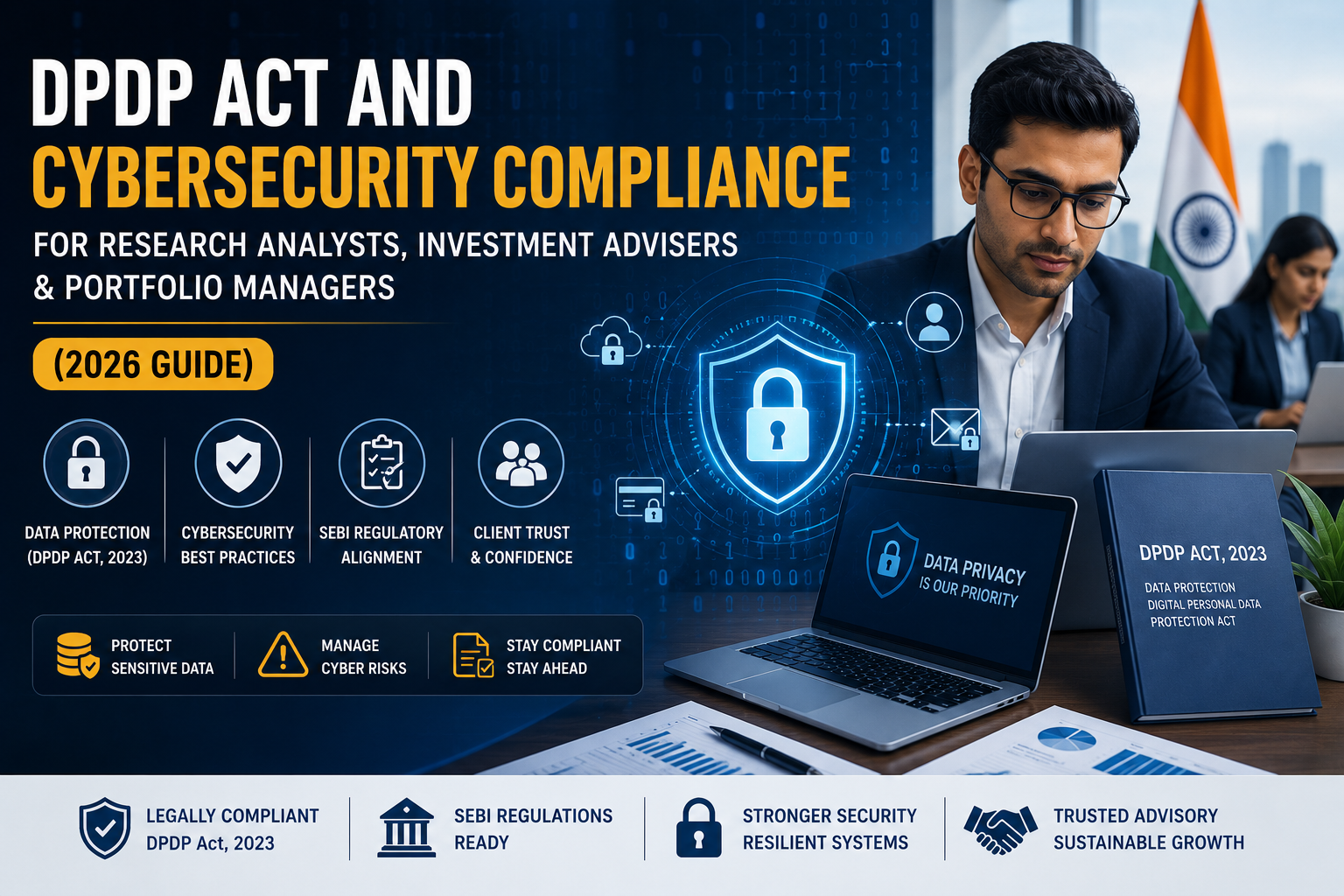
Digital transformation has fundamentally changed the way financial intermediaries interact with investors. Research reports are delivered electronically, advisory services are increasingly provided through online platforms, portfolio management relies on digital infrastructure, and client onboarding has largely become paperless. While these technological advancements have improved efficiency and client experience, they have also significantly increased cyber risks and the volume of personal data handled by regulated entities.
For SEBI-registered Research Analysts (RAs), Investment Advisers (IAs), and Portfolio Managers (PMS), protecting client information is no longer just good business practice—it is an essential regulatory responsibility. Cyber incidents, phishing attacks, ransomware, unauthorised access, and data breaches can expose confidential investor information, disrupt business operations, and damage an intermediary's reputation.
In addition to sector-specific regulatory obligations issued by SEBI, financial intermediaries must also consider the requirements of the Digital Personal Data Protection Act, 2023 (DPDP Act), which establishes India's framework for the lawful processing and protection of digital personal data.
This article explains how the DPDP Act and cybersecurity obligations intersect for SEBI-regulated intermediaries and outlines practical measures that firms should implement to reduce regulatory and operational risk.
Why Data Protection Matters for SEBI-Regulated Intermediaries
Every Research Analyst, Investment Adviser, and Portfolio Manager collects and processes sensitive client information as part of its business operations. This may include identity documents, PAN details, bank account information, financial profiles, investment objectives, income details, risk appetite assessments, communication records, and transaction histories.
Investors expect that this information will remain confidential and secure. Any compromise of client data can result in financial loss, identity theft, regulatory scrutiny, litigation, and a significant loss of investor confidence.
As financial services continue to become increasingly digital, regulators expect firms to adopt governance frameworks that protect both personal data and critical business systems.
Understanding the DPDP Act, 2023
The Digital Personal Data Protection Act, 2023 establishes the legal framework governing the collection, storage, processing, and protection of digital personal data in India.
The Act applies to organisations that determine the purpose and means of processing digital personal data. In most cases, SEBI-registered intermediaries act as Data Fiduciaries because they collect and process personal information from clients for providing regulated financial services.
The DPDP framework is built around principles such as lawful processing, transparency, purpose limitation, data minimisation, security safeguards, accountability, and respect for the rights of individuals whose personal data is processed.
For financial intermediaries, compliance with the DPDP Act should be viewed as an extension of existing investor protection obligations rather than a separate compliance exercise.
Cybersecurity: A Regulatory Expectation, Not Just an IT Issue
Cybersecurity is often misunderstood as a purely technical function. In reality, regulators increasingly view cyber resilience as a governance responsibility involving senior management, compliance officers, technology teams, and business leadership.
A cybersecurity framework should protect the confidentiality, integrity, and availability of information systems. This includes preventing unauthorised access, detecting cyber threats, responding effectively to incidents, and ensuring that critical business operations can continue during technology disruptions.
For regulated financial entities, cybersecurity is directly connected with operational resilience, investor protection, and regulatory compliance.
Personal Data Commonly Processed by RAs, IAs and PMS
Financial intermediaries typically process a wide range of digital personal data throughout the client lifecycle.
This information may include client identification documents, contact details, KYC records, income information, investment objectives, financial statements, portfolio holdings, communication records, nominee information, and bank account details.
Because much of this information is sensitive from a financial perspective, firms should ensure that access is restricted to authorised personnel and that appropriate security controls are implemented throughout the data lifecycle.
Building a DPDP-Compliant Privacy Framework
Compliance with the DPDP Act requires more than publishing a privacy policy on a website.
Organisations should establish documented policies explaining how personal data is collected, why it is required, how long it is retained, who has access to it, and the safeguards implemented to protect it.
Privacy governance should be integrated into client onboarding, digital platforms, CRM systems, mobile applications, investor portals, and internal workflows. Employees should understand their responsibilities when handling personal information and receive periodic awareness training.
Regular reviews of privacy practices help ensure that business processes continue to comply as regulations and technology evolve.
Strengthening Cybersecurity Controls
An effective cybersecurity programme combines technology, governance, and employee awareness.
Regulated entities should periodically review their information security architecture to identify vulnerabilities before they can be exploited. This includes protecting email systems, securing cloud infrastructure, implementing strong authentication mechanisms, encrypting sensitive information, maintaining secure backups, and monitoring systems for unusual activity.
Cybersecurity should also extend to third-party service providers, technology vendors, website developers, and cloud hosting partners, as vulnerabilities in external systems can also expose client information.
A proactive approach to cyber resilience is generally more effective and less costly than responding to a security incident after it occurs.
Incident Response and Business Continuity
Despite strong preventive measures, no organisation can completely eliminate cyber risk. What distinguishes a resilient organisation is its ability to respond quickly and minimise disruption.
Every Research Analyst, Investment Adviser, and Portfolio Manager should establish documented incident response procedures identifying responsibilities, escalation mechanisms, communication protocols, evidence preservation, and recovery processes.
Business continuity planning is equally important. Critical business operations should be capable of continuing even during technology failures, cyberattacks, or infrastructure disruptions.
Testing these plans periodically allows organisations to identify weaknesses before an actual incident occurs.
Employee Awareness: The First Line of Defence
Many cybersecurity incidents originate not from sophisticated hacking techniques but from simple human error. Phishing emails, weak passwords, accidental disclosures, and improper handling of confidential information remain among the most common causes of security breaches.
Accordingly, employee awareness should form an essential component of every compliance programme. Staff should receive regular training on recognising phishing attempts, protecting confidential information, securely using mobile devices, handling client communications, and reporting suspicious activities.
Creating a culture of cybersecurity awareness significantly reduces operational risk.
Website Security and Digital Compliance
For many regulated entities, the corporate website is the primary point of interaction with prospective clients. Accordingly, website security should receive particular attention.
Secure hosting, SSL encryption, access controls, regular vulnerability assessments, software updates, and secure administrator credentials are essential components of website security.
From a regulatory perspective, firms should also ensure that websites contain appropriate privacy disclosures, cookie practices where applicable, regulatory disclosures, investor information, grievance mechanisms, and mandatory disclosures prescribed by SEBI.
Cybersecurity and website compliance should therefore be viewed as complementary aspects of digital governance.
Common Compliance Gaps
Experience across the financial services sector shows that many organisations underestimate their cyber and privacy risks until weaknesses become apparent during audits or security incidents.
Frequently observed deficiencies include outdated privacy policies, weak password practices, excessive employee access rights, lack of documented information security policies, inadequate vendor oversight, absence of cybersecurity awareness programmes, delayed software updates, insecure email systems, and insufficient backup procedures.
Addressing these issues proactively can significantly improve both regulatory compliance and operational resilience.
Practical Steps for RAs, IAs and PMS
Rather than treating DPDP compliance and cybersecurity as independent projects, firms should adopt an integrated governance framework that combines legal compliance with information security.
Periodic privacy reviews, cybersecurity assessments, employee training, vendor due diligence, website compliance reviews, incident response planning, and documentation of internal policies together create a comprehensive compliance programme capable of meeting both regulatory and operational expectations.
Organisations that invest in these controls today are likely to be better positioned as India's digital regulatory landscape continues to mature.
How KP RegTech Can Help
At KP RegTech, we assist Research Analysts, Investment Advisers, and Portfolio Managers in developing practical compliance frameworks that align with both SEBI regulations and India's evolving digital governance requirements.
Our services include website compliance reviews, DPDP compliance gap assessments, cybersecurity governance advisory, regulatory documentation, policy drafting, compliance audits, SEBI inspection readiness, digital accessibility compliance, advertisement review, and ongoing compliance retainership.
By combining legal, compliance, secretarial, and technology expertise, we help regulated entities strengthen their digital governance while reducing regulatory risk.
Frequently Asked Questions
Does the DPDP Act apply to Research Analysts, Investment Advisers and Portfolio Managers?
Yes. To the extent these entities process digital personal data, they are expected to comply with the applicable provisions of the Digital Personal Data Protection Act, 2023.
Is cybersecurity mandatory under SEBI regulations?
SEBI expects regulated intermediaries to maintain appropriate information security and cyber resilience measures as part of sound governance and investor protection practices, subject to the applicable regulatory framework for the intermediary.
Is a privacy policy alone sufficient for DPDP compliance?
No. A privacy policy is only one component of compliance. Organisations should also implement appropriate governance, security safeguards, internal processes, and documentation.
Why should small advisory firms focus on cybersecurity?
Cybercriminals frequently target smaller organisations because they may have weaker security controls. Strong cybersecurity practices help protect client information, maintain business continuity, and reduce regulatory risk.
How often should cybersecurity and privacy frameworks be reviewed?
They should be reviewed periodically and whenever there are significant regulatory changes, technology upgrades, new digital services, or major business process changes.
Conclusion
As India's financial services sector becomes increasingly digital, data protection and cybersecurity have become central pillars of regulatory compliance for Research Analysts, Investment Advisers, and Portfolio Managers. The DPDP Act, 2023 reinforces the importance of responsible handling of personal data, while SEBI's governance expectations continue to emphasise operational resilience, investor protection, and robust internal controls. Firms that proactively strengthen privacy governance, cybersecurity frameworks, employee awareness, and digital compliance will not only reduce regulatory risk but also build greater trust with investors in an increasingly technology-driven market.