For many Research Analysts and Investment Advisers, the word inspection creates unnecessary anxiety.
Not because something is wrong—but because inspections are often misunderstood.
In reality, regulatory inspections are not surprise tests of perfection.
They are structured reviews meant to assess whether a business is operating in a consistent, disciplined, and transparent manner.
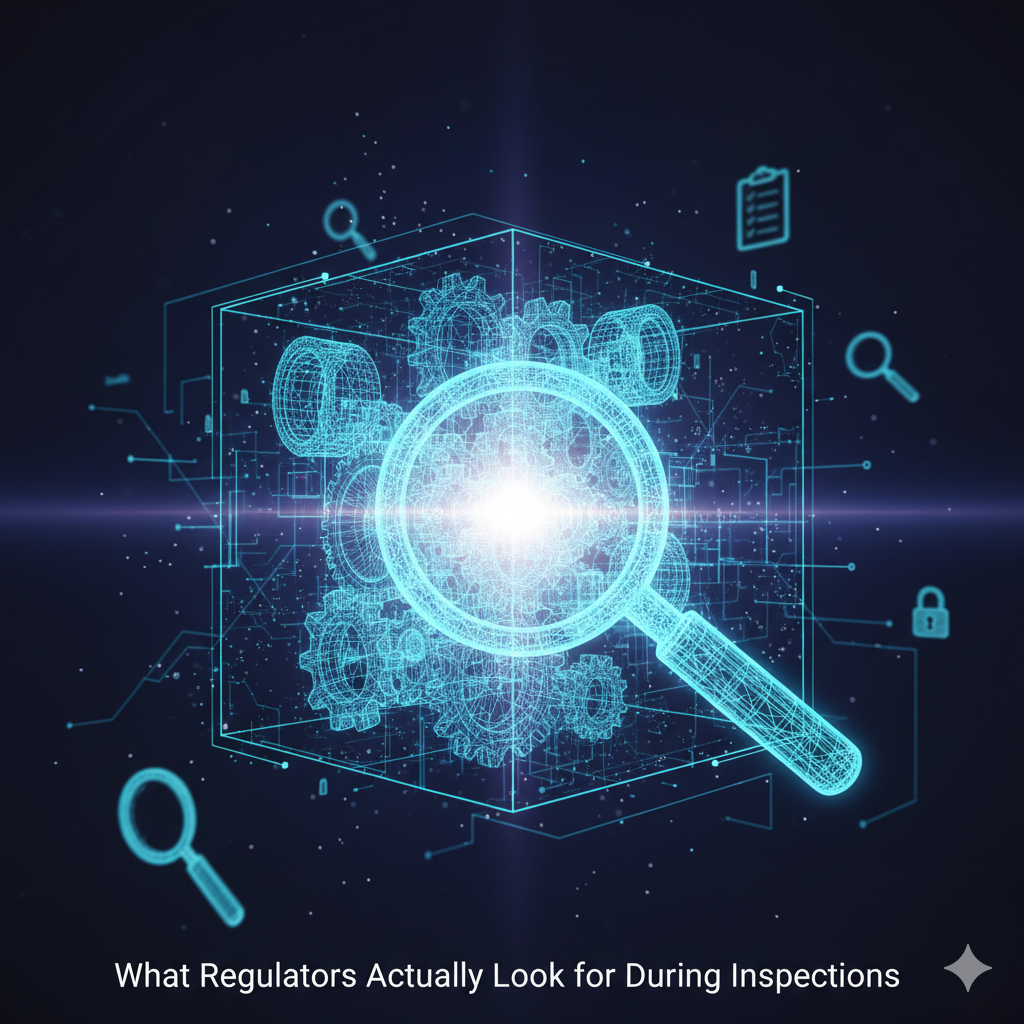
This article explains what regulators actually look for during inspections, and why firms that understand this experience inspections as orderly and uneventful, rather than stressful.
Inspections Are About Systems, Not Incidents
A common misconception is that inspections focus on isolated mistakes.
In practice, regulators are far more interested in:
Patterns, not one-off errors
Processes, not explanations
Systems, not intent
An isolated lapse is rarely decisive.
What matters is whether the organisation had a reasonable framework to prevent, detect, and address issues.
1. Consistency Between What You Say and What You Do
One of the first things examined during inspections is alignment.
Regulators look at whether:
Policies reflect actual operations
Client communications match disclosures
Website content aligns with registered activities
Inconsistencies raise questions, even when documents exist.
Simple test:
If someone reads your policy, website, and client communication together—do they describe the same business?
2. How Advice Is Actually Delivered
Beyond agreements and formats, regulators assess how advisory activity happens in practice.
They look for:
Clear advisory rationale
Traceable advice records
Linkage between risk profiling and recommendations
The focus is not on volume, but on clarity and repeatability.
When advice delivery is structured, records explain themselves.
3. Record-Keeping That Can Stand on Its Own
Records are reviewed not just for existence, but for credibility.
Regulators assess whether records:
Are contemporaneous
Are complete for selected periods
Can be produced without reconstruction
If records require narration to make sense, they are treated cautiously.
Good records reduce inspection dialogue.
Weak records increase it.
4. Role Clarity and Accountability
Especially in non-individual entities, inspections pay close attention to who does what.
Regulators expect clarity on:
Principal Officer responsibilities
Compliance oversight
Employee and support roles
Escalation and supervision mechanisms
Inspections do not assume responsibility—they expect it to be demonstrable.
5. Public Communication and Client Impression
Websites, marketing material, and digital content are routinely reviewed.
The focus is not on creativity, but on:
Accuracy
Balance
Absence of implied assurance
Regulators assess communication from the investor’s perspective, not the firm’s intent.
If a reasonable client could misunderstand, clarification is expected.
6. Grievance Handling as a Process
Complaint records are examined to understand:
How issues arise
How they are addressed
Whether root causes are corrected
Resolution alone is not the endpoint.
Regulators look for learning and prevention.
Well-structured grievance processes often reassure regulators even where complaints exist.
7. Governance in Practice (Not on Paper)
For companies, LLPs, and partnerships, inspections assess whether governance is active.
This includes:
Periodic internal reviews
Evidence of oversight
Decision-making records
Governance is evaluated through visibility, not hierarchy.
8. Willingness to Acknowledge and Improve
Perhaps the most understated aspect of inspections is this:
Regulators do not expect perfection—they expect responsiveness.
What matters is whether:
Gaps are acknowledged calmly
Corrective steps are practical
Systems improve over time
Defensive explanations complicate inspections.
Structured responses simplify them.
What Inspections Are Not About
Inspections are generally not about:
Punishing good-faith businesses
Penalising minor human errors
Expecting zero deviation
They are about assessing whether compliance is embedded, not reactive.
A Useful Perspective
Firms that find inspections stressful usually:
Treat compliance as a year-end task
Depend on memory over systems
Explain more than they demonstrate
Firms that find inspections routine usually:
Operate consistently
Maintain simple discipline
Let records and processes speak
Closing Thought
Within the regulatory ecosystem governed by the Securities and Exchange Board of India, inspections are not hurdles—they are checkpoints.
When compliance is part of daily operations:
Inspections feel predictable
Conversations stay factual
Outcomes remain manageable
Understanding what regulators actually look for replaces fear with clarity—and clarity is the strongest compliance advantage.
What Regulators Actually Look for During Inspections